There are several words that you have probably seen that are used to describe homeostasis:
- Equilibrium
- Stability
- Balance
- Steady state
Basically, living organisms need to be able to maintain balance within their internal environment, especially compared to the outside environment. Imagine going outside on an incredibly hot or cold day and your internal temperature were to change to maintain balance with the external environment. This would not be healthy and would upset everything in the body. As such, there are mechanisms put into place so that this does not happen.
These mechanisms include:
Negative feedback – this mechanism works to reduce or reverse a change in the internal environment
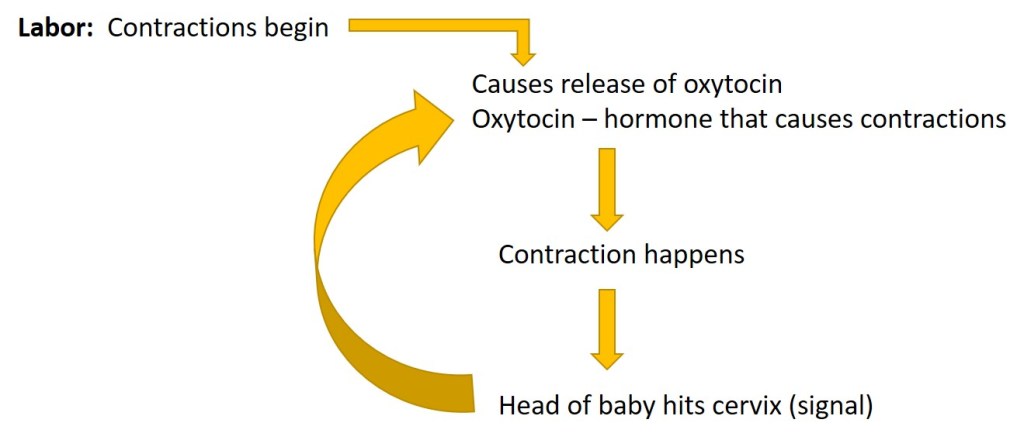
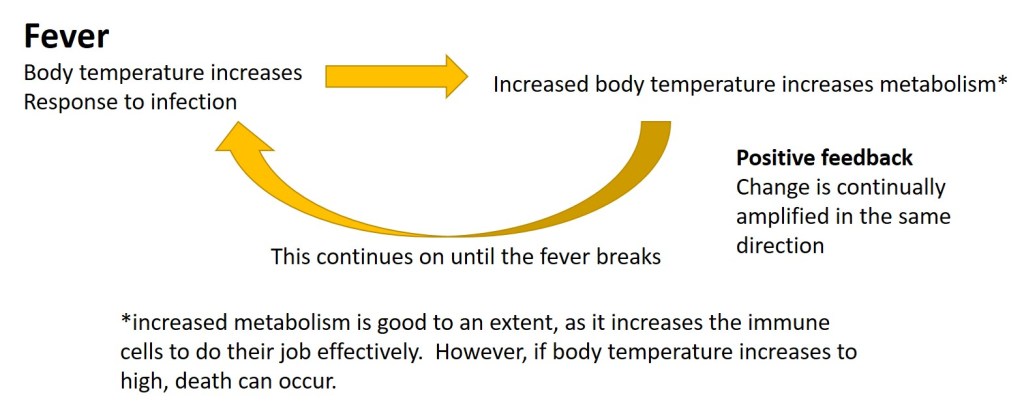
Positive feedback – this mechanism amplifies a change or keeps it going in the same direction.
Feedback systems are how biological processes can self-regulate or maintain stability (homeostasis). Most of the control mechanisms of homeostasis are based on negative feedback, which is the most common form of regulation in living systems. However, though less common, there are also biological processes that are regulated by positive feedback systems.
Negative Feedback
This common mechanism works to reverse a change. When the normal “set points” are disrupted, these mechanisms can kick in and bring the change back to the normal set point. For example, when you go outside and it is freezing, your body keeps on mechanisms to keep your internal temperature constant. These mechanisms reverse the change (your body being cold outside) and work to keep internal temperature constant. There are many examples of negative feedback which you will cover throughout your course. For now, I will include a couple of examples here for you to understand it better.

Positive Feedback
These mechanisms are not as common, but do exist. Rather than working to reverse a change in order to maintain homeostasis, these mechanisms amplify a change and keep the change going in the same direction. I will include a couple of examples below for you to understand it better.
If you would rather hear the explanations of these feedback systems or have a little more in-depth discussion of this topic, please check out my YouTube video at:
If you like my video, please make sure to subscribe to my channel so you are always kept up to date on new video additions, and like and share the video. Thank you so much.
 Learning Biology with Dr. Vanessa, LLC