Basic explanation of antigens and antibodies and how they interact. More in-depth discussions on this topic will happen at a later time.
What is an antigen (Ag)?
- Substance (molecule) that the body recognizes as foreign
- Substance capable of provoking an immune response
- Substance that stimulates the immune system to make antibodies
- Example: Virus, bacteria
Recap: An antigen is a foreign substance that the body does not recognize as one of its own, as such, the body is capable of engaging in an immune response against it. This idea is more complex and will be further discussed in a later blog/video.
What is an antibody (Ab)?
- Specialized protein that can help immune cells destroy antigens
- Also referred to as Immunoglobulins (proteins found in the blood)
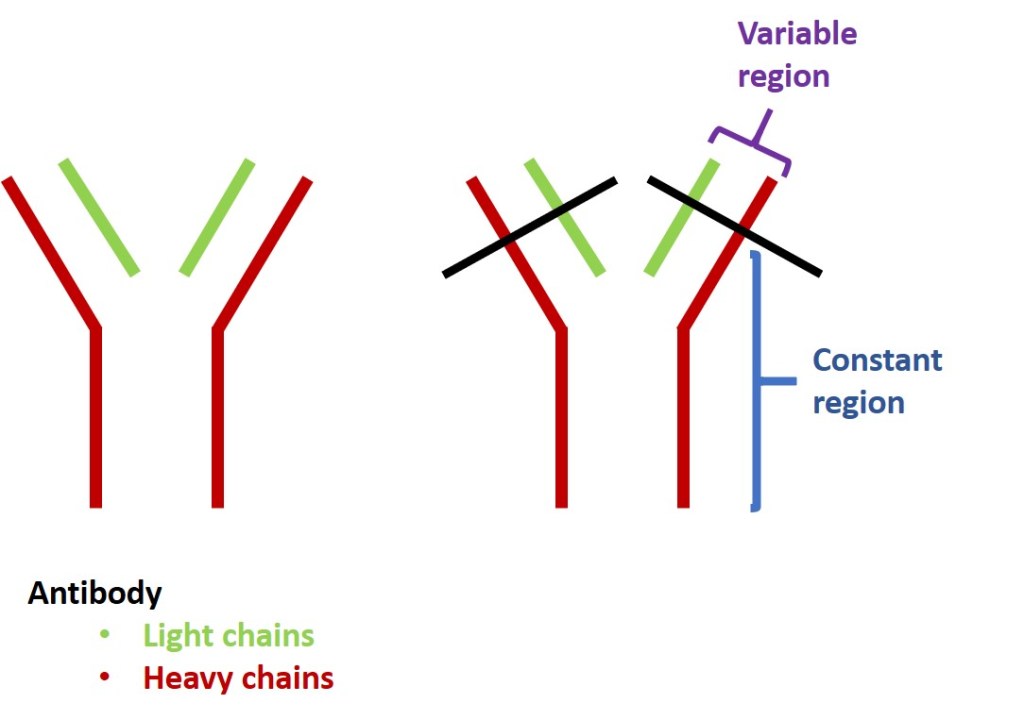
- Composed of 2 Heavy and 2 Light chains (refer to figure below)
- Composed of a Constant and Variable regions (refer to figure below)
- Constant region – remains the same for all antibodies. Antibodies that are attached to cell would have this region embedded in the cell membrane
- Variable region – as the name implies, this region is variable. This region is also where an antibody would bind an antigen. Since this region varies, it allows for antibodies to be able to bind various antigens. This topic is more complex and will be discussed in more detail in a later blog/video.
Recap: An antibody is a specialized protein, made by the body, capable of binding to various antigens.
How do antibodies and antigens interact?
An antibody binds an antigen in its variable site or antigen binding site. This binding blocks the antigen from doing harm to the body and flags it for removal. For example, if the antigen was a virus, the antibody would bind to the virus and now the virus can no longer infect cells. This is one of the many defense systems the body uses against foreign substances.

*Note, there are different types of antibody classes and different functions of antibodies, these will be discussed in later blog/videos. This is only a basic explanation of antibodies and antigens to help those who may be struggling with the concept.
 Learning Biology with Dr. Vanessa, LLC