Every house you see has its own structure. You can’t build a house without a wooden framework, right? This framework holds up our homes. Just like this, our body also needs these frameworks for support and strength and we call them bones. The skeleton is what holds us together and it allows us to move our body.
What is a Skeletal System?
Composed of bones (cartilage and ligaments)
Cartilage is the precursor for most bones. It also is found on the ends of bones to keep bones from rubbing against each other.
Ligaments attach bone to bone.
Tendons attach muscle to bone.
Note: These attachments of bone to bone and muscles to bone allows your skeleton to move freely.
Functions of the Skeleton
Protection
Support
Movement
Electrolyte balance
Acid-base balance
Blood movement
Bone Tissue aka Osseous Tissue
Connective tissue with a matrix hardened by calcium phosphate and other minerals.
Even though bone is hardened, it is a living tissue.
Bone Shapes
Long bone Ex: Humerus, radius, ulna, metacarpals, phalanges, femur, tibia, fibula
Short bone EX: Bones of the wrist, carpals and tarsals in the ankle.
Flat bones EX: Cranial bones, ribs, sternum, scapula, and hip bones.
Irregular bones EX: Vertebrae, and some skull bones.
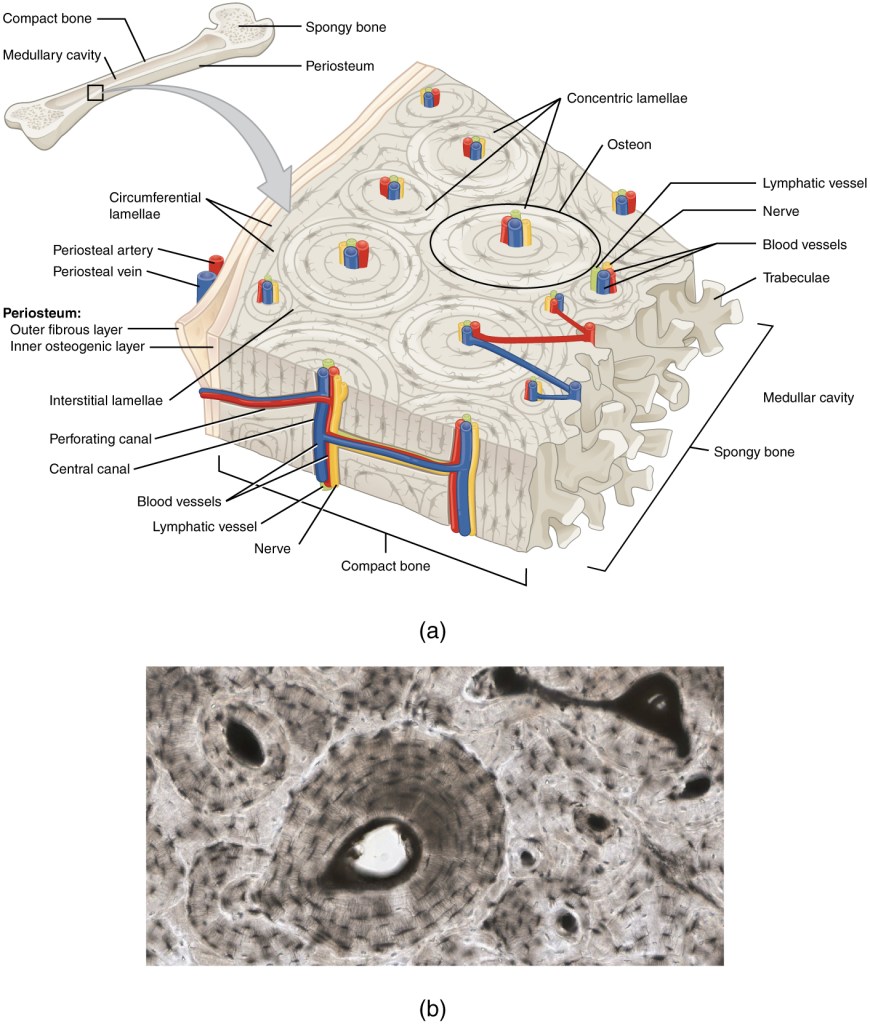
When we take a closer look at the features of our bones, we’ll notice that the bone is made up of two different types of the bone:
Compact bone – is a very dense osseous tissue. It covers the surface of most bones.
Spongy bone – is loosely organized tissue. It makes the bone lighter.
Osteogenic cell is a stem cell that gives rise to osteoblasts.
Osteoblasts are bone-forming cells. These are non-mitotic.
Osteocytes are mature bone cells that maintain bone tissue.
Osteoclasts function in resorption and break down of bone extracellular matrix.
Note: Bone Development is a lifelong process.
Ossification – formation of bone tissue.
Formation of bone in the embryo.
Growth of bones until adulthood.
Remodelling of bone
Repair of fractures
Two types of ossification:
Intramembranous ossification
Endochondral ossification
For a video version of this, with more details, be sure to watch my lecture on the Introduction to the Skeletal System below.
The central dogma of Biology is DNA –> RNA –> protein. But how do we get there? This is where the processes of transcription and translation come into play. Transcription is the process by where RNA is synthesized from a DNA template and translation is the process by where protein is made from the RNA (mRNA) template. Let’s discuss in detail, how each process works.
Transcription
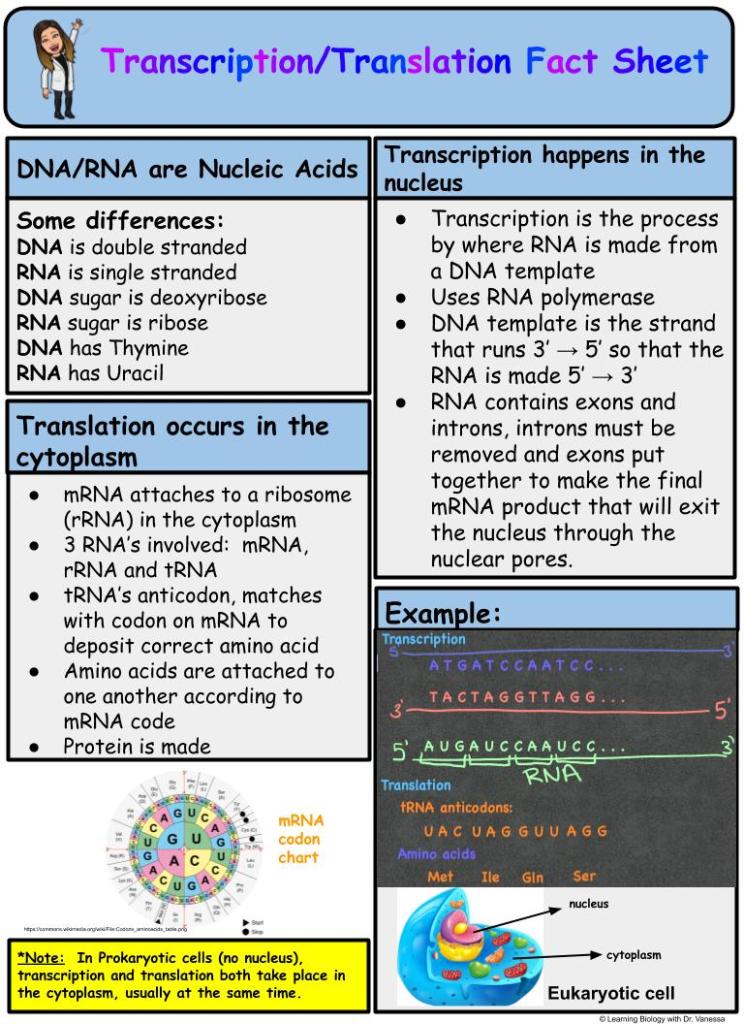
In Eukaryotic cells, transcription occurs in the nucleus. DNA is double stranded, with one strand running 5’ –> 3’ and the other running parallel at 3’ –> 5’. Transcription or RNA synthesis, involves the DNA strand running 3’ –> 5’ or the DNA template. RNA polymerase, an enzyme needed for this process, binds to the promotor region of the DNA. As RNA polymerase moves down and opens up the DNA, it adds nucleotides based on the DNA code. The nucleotides that are added are base pairs to the DNA template. The RNA polymerase will move down until it encounters a stop codon, at which point the RNA will be released. The RNA that is released is actually pre-mRNA. It contains both introns and exons. In order to be properly read and turned into protein, the introns need to be spliced out by RNA splicing and the exons put together. Once this process happens, the mature mRNA, will exit the nucleus through the nuclear pores and enter into the cytoplasm.
Translation
Once the mRNA is in the cytoplasm, it can bind to a ribosome where the process of translation will take place. In order for translation to occur, there are three RNA’s needed. These are the ribosome or rRNA, the mRNA which binds to the ribosomes and just came from the nucleus, and tRNA. mRNA is read in triplets or codons, so every three nucleotides. tRNA has anticodons, so three nucleotides that will match with the codons on the mRNA. For each anticodon tRNA has, it carries a specific amino acid. So again, the amino acid that tRNA carries is based on its anticodon. This allows the proteins that each mRNA codes for to be made the same way every time. tRNA travels to the ribosome, binds its anticodon to mRNAs codon and deposits its amino acid, this will continue until the entire amino acid chain (polypeptide) is made and the tRNA reaches a stop codon. (This process is much more specific and I have explained it thoroughly in the video I linked below) At this point, the protein will be released. It can be folded, have posttranslational modifications made to it, be chaperoned somewhere. At this point the protein is made and what happens next just really depends on its function.
*NOTE: In prokaryotic cells (cells which have no nucleus), transcription and translation both occur in the cytoplasm, usually at the same time.
Here is a video that I made on this topic. It goes into much more detail so that you can really grasp this concept:
Here is a study guide / fun fact sheet I made on this topic:
Let me know what you think. Should I make more fact sheets? Do you like the video? Comment below and let me know your thoughts or if you have any questions.
Have you ever heard of asthma? Do you think it is caused by dry and cracked lips from cold weather or some other myth?
Asthma is actually a breathing disorder that affects about 300 million people worldwide, mostly children, and can range from mild to life-threatening.
Many people mistakenly believe that asthma always has similar signs and symptoms. However, asthma symptoms vary widely from one individual with the condition to another. This is because there are two types of asthma: allergic and non-allergic (or intrinsic).
To learn more about this condition and some quick facts about asthma in general, please check out this blog post.
What Is Asthma?
Asthma is a chronic inflammatory lung disease that affects the airways. It causes the airways to narrow and produce extra mucus, making it difficult to breathe.
Some people are born with asthma, but others develop it later in life. Asthma can be triggered by allergens like pollen, dust mites, exercise, or colds. People with asthma may need medicine to help them breathe better and control their symptoms.
The most common symptoms of asthma include:
Coughing that occurs at night or early in the morning;
Wheezing or whistling sound when exhaling;
Shortness of breath during physical activity;
Chest tightness or difficulty breathing
Sweating
What Happens In An Asthma Attack?
In an asthma attack, your airways become inflamed, making breathing difficult. Asthma attacks can happen when something irritates your airways or when you have an allergic reaction.
Here’s what happens during an asthma attack:
The lining of your airways becomes inflamed (swollen). This makes it harder for air to pass through the tubes that carry oxygen into your blood.
Your muscles around the airways tighten up, making them even narrower and harder for air to pass through. This is called bronchospasm.
What Causes Asthma?
The cause of asthma is unknown, but it’s thought to be related to a combination of factors:
Smoking cigarettes or second-hand smoke (also called passive smoking).
Inhaling chemicals in the air such as those found in cleaning products, perfumes and air fresheners.
Exercise or exercise-induced asthma.
Changes in temperature.
Pollen from trees, weeds, grasses, and mold.
Dust mites (tiny bugs that live in bedding and furniture).
Household pets (cats and dogs).
Two Types Of Asthma
Allergic asthma – is caused by an immune reaction to allergens (such as dust mites, pollen, mold spores and pet dander) that triggers symptoms like coughing, wheezing and shortness of breath.
Non-allergic asthma – is not caused by allergic reactions. It’s usually triggered by exercise or cold weather, but can also be caused by sleeping position or emotional stress.
How Does Asthma Affect The Lungs?
People with asthma experience recurring periods of wheezing, breathlessness, chest tightness, and coughing caused by inflamed airways. When they breathe in, the muscles around their airways tighten. This makes the walls of their airways (bronchi) narrow or even swell.
When you have an asthma attack, your body releases chemicals called inflammatory mediators that cause swelling and inflammation in the lungs. This causes more mucus production and makes it harder for you to breathe.
The inflammation means that the linings of your lungs are irritated by things like dust or pollen—even something as simple as cold air can make them inflamed! If you have asthma, you’ll need to use an inhaler or nebulizer (a device that turns the medicine into a mist) when your symptoms flare up so that you can breathe better.
Asthma can be treated, but there is still no cure. Many people with asthma need to use a reliever inhaler often, especially at night. The medicines may not cure asthma, but they help the symptoms to give the lungs a rest.
If your asthma is not under control, you need to visit your doctor. Asthma medication can help you breathe easier and prevent allergic symptoms from developing. Manage your asthma and continue to live a healthy and active lifestyle.
To learn more view my video here:
If you like my content, please make sure to subscribe to my blog and my YouTube channel to learn more!
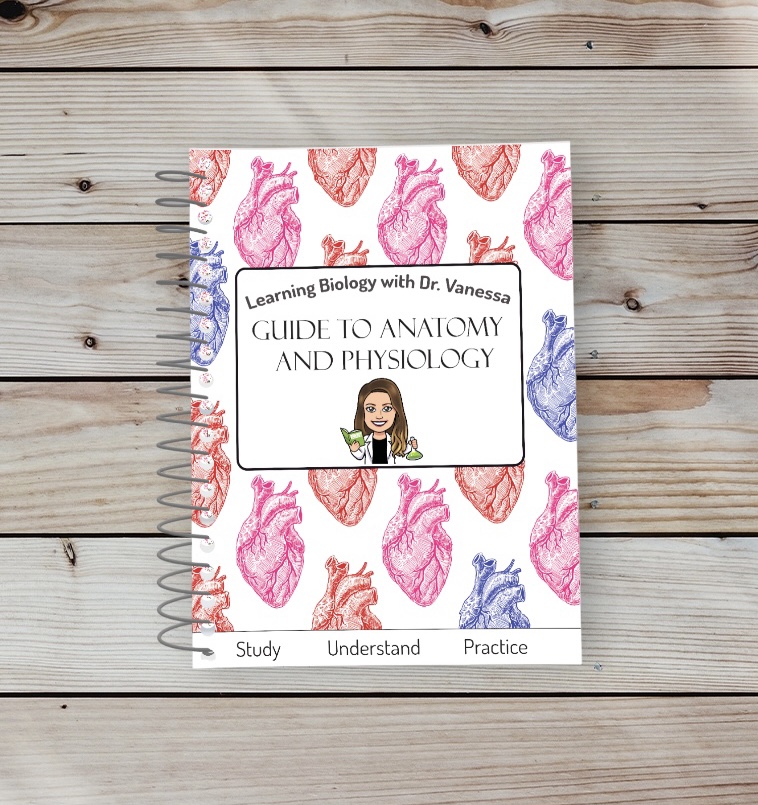
Imagine if there was a better way to learn Anatomy and Physiology. Picture this: easy-to-understand blurbs, reinforcing activities, and coloring with labeling! All of these things are included in my Guide to Anatomy and Physiology. It is the perfect tool to help you master and finally understand Anatomy and Physiology.
My Kickstarter campaign is currently running. The funds from this campaign will be used to print and ship the first batch of my guide.
Even if you can’t contribute monetarily, simply sharing with your network is so appreciated! By sharing, I can have a further reach.
Let’s work together to spread the passion and love for Anatomy and Physiology!
***Special Early bird pricing to get your own copy ends on Friday***
It’s been awhile since I’ve written a blog. I’ve been working hard behind the scenes to get things up and running for the next journey of my business. As many of you know, I have a YouTube channel that focuses on making difficult topics in Anatomy and Physiology easy to understand. If you haven’t already subscribed, make sure you do!
I’m excited to announce that I am taking this a step further!
My Guide to Anatomy and Physiology includes bite-size pieces of information, written in a way to enhance understanding. There will also be coloring pages and activity pages to reinforce the learning from the reading. This guide is being written with a wide audience range. From students in high school or college who are taking the class, to teachers and professors who are teaching the class and want to use it as a supplement. But even more, there is something for everyone. It is even for those who aren’t taking the class but want to learn more about how their own body works.
Through this guide, I hope to fuel a passion for learning Anatomy and Physiology and increase health literacy.
Would you like to join me along my journey? My Kickstarter will launch next week. Right now, it is pre-launched, and you can follow it and share it with others to spread the word, and be notified when it launches.
It takes a village, and together we can make a difference! Check out and follow my pre-launch Kickstarter campaign here.
Here’s some of the things you can expect from me in the future as you follow along!
Publishing an awesome easy to understand workbook with great activities to reinforce learning: Guide to Anatomy and Physiology.
Uploading new videos to my YouTube channel to continue to make difficult topics in Anatomy and Physiology easy to understand.
Creating more worksheets and activities for my Teacher Pay Teacher page. If you haven’t seen it, check it out here.
And as I work on all of these, my goal is to make versions in Spanish available for all! This includes my Guide to Anatomy and Physiology and my TPT worksheets!
The more you know about your body and how it works, the better you can understand and form those decisions.
By learning more about ourselves, we can make better, healthier decisions for our future.
Asking the right questions during a well visit to your doctor is important for your health and well-being. A good part of the reason you go to the doctor’s office is that you want answers to questions you have about your health. After all, knowing what’s wrong with you can help you get better more quickly.
When you visit the doctor, there are certain questions you should ask to determine how he or she can best care for your health. These can help avoid misdiagnosis and unnecessary testing, as well as provide a more personalised experience. Whether your physician’s advice is sound or not, these questions will help you make an informed decision.
This blog is meant for those who may feel nervous about visiting their primary care physician and want to prepare ahead of time.
Here are essential questions that you must ask your doctor during your well visit
How do you feel?
Don’t be afraid to ask about symptoms or what you can do to feel better, even if the answer seems obvious. Doctors often don’t know exactly what’s wrong with patients, so it helps to get a sense of their diagnosis.
What are the risks?
You may not realize that certain medications or conditions can increase your risk of something bad happening, like an accident or a heart attack. It’s also important to know what treatments are available for any medical problems you might develop in the future.
What tests do you need?
Doctors may recommend several different types of tests when they see you, such as blood tests or X-rays. Ask the doctor what tests they think are most important for you and why they recommend them. For example, if your doctor thinks a new medicine might help you feel better, ask them if it needs to be taken every day or if there are other ways to take it that might work better for you.
How often should you come back?
Some doctors may recommend coming back more often than others. If this happens, ask about the frequency of visits and how long an appointment will last (usually 30 minutes). If a certain test needs to be repeated in a certain amount of time, make sure that you understand exactly how long it will take before bringing up this issue with your doctor again.
What are your recommendations for my health?
This question is crucial because it gives you someone else to talk to and helps you understand the doctor’s area of expertise. The doctor might be able to offer you advice on how to manage specific problems you’re having or how to avoid them altogether.
Your well visit is an important time to ask your doctor questions about your health and ways to improve it. Getting your blood drawn at every yearly physical is also a good practice. Having numbers from when you are feeling good, will give you a baseline for your own body. This way, when you do feel off, you have a comparison.
Good nutritional habits are usually the foundation of healthful living; this includes eating balanced meals that include fruits, vegetables, lean protein, whole grains and dairy products.
The most important thing that you can get out of your well visit is a better understanding of your needs are as a patient. It’s a chance for you and your doctor to review what is, and what isn’t, working for you. Ask about treatments available for various ailments, and treatments that have worked for other patients in the past. This isn’t the time to ask about getting a thorough exam—this is the time to craft an action plan based on the current state of your health.
Many people are suffering from diabetes in today’s generation. Many of them don’t even realize that they’re suffering from it.
Just like the thousands of other people dealing with diabetes, you want answers and tips to help manage your diabetes. Managing diabetes can sometimes seem like an impossible task, but with the right information and motivation, it can be done.
In this blog, we’ll cover the basics of what diabetes is, what causes diabetes, as well as its different types. We’ll also discuss some of the symptoms of diabetes.
What Is Diabetes?
Diabetes is a condition in which the body has trouble regulating blood sugar levels. This can lead to several complications, including high blood pressure, heart disease, kidney disease, blindness and nerve damage.
Your body needs sugar to function, but if your pancreas doesn’t produce enough insulin, or if your cells become resistant to it, it can’t use the sugar in your blood. This leads to high blood sugar (hyperglycemia).
What Causes Diabetes?
The first factor is that the body doesn’t produce enough insulin, a hormone that helps the body absorb glucose (a type of sugar) from food. This can result from a lack of insulin production or an inability to use the insulin produced. Either way, when your body doesn’t have enough insulin to regulate blood sugar levels, you may have diabetes.
The second factor is that the body’s cells become resistant to insulin. This means they no longer respond to the hormone at all or not as well as they used to. When this happens, your body’s cells don’t get all the glucose they need for energy, which can lead to high blood sugar levels.
The third factor is that the pancreas does not produce enough insulin in response to rising blood sugar levels due to eating food with too many carbohydrates (sugars).
The Two Main Types Of Diabetes Are Type 1 And Type 2.
Type 1 diabetes is an autoimmune disease that causes the body to destroy its beta cells, which produce insulin. This form of diabetes most often occurs in children and young adults.
Type 2 diabetes occurs when the body does not use insulin properly, or when the pancreas stops producing enough insulin to keep blood sugar levels in check. This type of diabetes usually develops later in life and can be managed with lifestyle changes like weight loss and exercise.
When you have either type of diabetes, you need to take medication or use other treatments like insulin shots to help manage your blood sugar levels so they don’t get too high or too low.
What Are The Symptoms Of Diabetes?
• Frequent urination
• Excessive thirst
• Unexplained weight loss or sudden weight gain
• Dry mouth and dry eyes
• Fatigue and weakness
• Tingling, numbness, or pain in your legs or feet
What Are The Treatments For Diabetes?
The treatments for diabetes can be split into two main categories: lifestyle and medical.
Lifestyle treatments for diabetes include eating a healthy diet, getting regular exercise, and managing stress. This is the best way to prevent or delay diabetes from developing in the first place.
Medical treatments for diabetes include oral medications and insulin injections. These can help control blood sugar levels, but they don’t cure the disease itself.
It is important to know the facts about diabetes. Diabetes is a serious disease, and it can affect anyone, but with proper precautions and lifestyle changes, you can live a fruitful life.
While there are many foods that diabetics can eat and still maintain adequate nutrition, at the end of the day it is important to consult with a doctor or nutritionist regarding what is best for your needs. Now that you know what diabetes is all about, make sure you share it with others. You never know when your information may come in handy to someone else.
To learn more, take a look at my two part series on Diabetes.
Are you a concerned heart patient? This is the right place to know about cholesterol levels, bad and good cholesterol, and blood work labs.
While the term “cholesterol” has become over-used, misunderstood, and even feared, it’s important to know your cholesterol numbers. Knowing your blood work lab results will help you make informed decisions about your health.
When most people hear the words “high cholesterol”, they’ll typically think of someone who is eating too much saturated fat, or just need to up their exercise. Most people think cholesterol is bad, something that needs to be cut out of your diet and that’s the end of it. But let’s talk about what cholesterol is.
What Is Cholesterol?
Cholesterol is a fatty substance that’s found in your bloodstream. It’s a waxy, fat-like substance that helps promote cell growth and protect your body from bacteria. A healthy person has between 200 and 300 mg of cholesterol in every deciliter (1/10th litre) of blood.
But having too much cholesterol can be harmful to your health, especially if it builds up in your arteries.
It’s important to keep your cholesterol levels in check because high levels of this substance can lead to heart disease, which can cause strokes and other serious health problems.
There are two types of cholesterol:
HDL cholesterol helps reduce your risk for heart disease by removing excess cholesterol from your arteries and transporting it back to your liver where it can be broken down and excreted from the body.
LDL cholesterol carries cholesterol through your bloodstream to cells that need it for healthy growth. A high level of LDL cholesterol can cause plaque buildup on artery walls, which increases your risk for heart disease or stroke.
Your body needs both types of cholesterol to function properly. But too much bad cholesterol can lead to heart disease and stroke. That’s why it’s important to know what your blood work labs are telling you about the levels of good and bad cholesterol in your blood.
Good vs. Bad Cholesterol
The difference between good and bad cholesterol lies in its size, density and chemical structure. Good cholesterol (HDL), is large fluffy and buoyant; while bad cholesterol (LDL), is small, dense, and sticky. HDL contains more protein than LDL, which makes it less likely to stick to artery walls. HDL can help remove LDL from the body by taking it out of circulation through the liver!
What does your blood work tell you about your cholesterol?
Cholesterol testing is one of the most common blood tests given, just like fasting blood sugar or blood pressure. There are lots of numbers which may scare you away but they don’t need to be!
When you go to the doctor, they’ll often check your blood work to see how healthy your cholesterol levels are. But what does all that jargon mean?
It’s important to have good and bad cholesterol in your body—but not too much of either. The good kind (HDL) helps remove excess cholesterol from your body and prevents it from blocking arteries, while the bad kind (LDL) can cause plaque buildup on artery walls.
If your LDL level is high, it means that more of this type of cholesterol has accumulated in your arteries than can be removed by HDL. Conversely, if your HDL is low and your LDL level is high, it could indicate a risk for heart disease.
Your total cholesterol level is calculated by adding together your HDL and LDL levels: if it’s greater than 240 mg/dL or 100 mg/dL above the normal range for men/women respectively then you should talk with your doctor about treatment options like statins or lifestyle changes such as losing weight or exercising more frequently!
Keeping your cholesterol in check can help prevent heart disease, stroke and other health problems.
One thing to consider is your lifestyle and what you can do to change if that seems like the right course of action. For example, everything is in moderation. Even if you don’t have high cholesterol, your diet should be comprised mainly of fruits and vegetables and whole grains. If you do have high levels of cholesterol, though, your food choices may be more limited or you may have to add a supplement or two to your daily routine.
Most of us have heard of both viral and bacterial infections. Both of these organisms can cause infection in the human body.
Viruses and bacteria are two different types of microorganisms. They both are little things that live in our bodies and cause diseases, but they are by no means similar.
Both viruses and bacteria contain genetic information. Bacteria contain DNA, while viruses can contain either DNA or RNA. However, they differ in many ways.
Let us take a closer look at bacteria and viruses so that we can understand the differences between viruses and bacteria.
What Is Virus?
Viruses are tiny. So small they cannot be seen without the use of a microscope. They are even smaller than bacteria. They can have either DNA or RNA as their genome (genetic information so they can make more of themselves).
A virus can’t survive for very long outside of an organism’s cells, so it has to make sure it gets into one! The virus uses the organism’s cells as its host. With the machinery of the cell it can make more of itself, replicate, infect other cells and keep going. This is why viruses cause sickness like colds or flu when they’re passed from person to person!
There has been a long scientific debate as to whether viruses are living or not. Viruses can “live” as long as they have a host, without a host, they die. Some viruses can live longer without a host, making them more transmissible than others.
What Is Bacteria?
Bacteria are living things that live everywhere—in the air, in our water supply, and on our skin. They’re also all around us in our homes and workplaces. They can be found in soil, sewage, food and water.
Bacteria are single-celled organisms that can reproduce both by binary fission and sexual conjugation. Most bacteria have cell walls and are unable to move independently. Within their cell, they have DNA (their genetic material), they can also do things such as metabolize and reproduce, and to put it simply: they’re alive.
Some bacteria are harmful to humans, animals and plants while others help them grow by producing nutrients like nitrogen.
What Makes These Two So Different?
Bacteria are living things and viruses aren’t.
Viruses are organisms that are not considered living because they cannot survive on their own. Instead, viruses must invade the cells of other organisms to survive; once inside the cell, the virus takes control of its host cell’s machinery and makes copies of itself.
Bacteria, on the other hand, are considered living organisms with a cell wall and cytoplasmic membrane, as well as DNA and RNA inside.
Viruses are smaller than bacteria.
Bacteria are larger than viruses, with a size that can be up to 1 micrometre (1 millionth of a meter) long. A virus is anywhere from 40 nanometers (0.00004 mm) to 100 micrometres (0.001 mm) in diameter. They’re so small that it’s hard to see them with the naked eye, but you can see the damage they do if you look closely enough!
Bacteria can survive without a host while viruses need a host to survive.
Bacteria can survive without a host, which means they can live on their own and don’t need to infect another organism to reproduce. Viruses cannot survive without a host. They enter an organism to replicate and spread, using the host’s genetic material as they do so.
Bacteria can be killed by antibiotics, but viruses cannot.
Antibiotics can be used to combat bacterial infections, these medications destroy their cell walls or interfere with their ability to reproduce. Viruses rely on the host cell’s ability to reproduce to replicate themselves, so they cannot be killed by medications that target bacteria’s reproductive processes.
Overall, the two may appear to be similar or identical at first glance but they are different in many ways. Their crucial differences make them both a part of our world and a threat to our health. We should take all necessary steps to keep them at bay if we want to lead a healthy life since both viruses and bacteria cannot be seen with the naked eye or any of the conventional medical instruments.
In order to help prevent viral and bacterial infections, it is important to maintain good hygiene. Always wash your hands, make sure not to be around others who are sick, if you are sick yourself, maintain your distance from others. Be sure to exercise and eat a healthy diet to keep your immune system strong.
If you are infected with a virus, there is usually nothing you can do about it besides rest and drink plenty of fluids. If you get worse, you will need to see your physician. If you catch it early enough, the doctor may sometimes prescribe an antiviral, but there are side effects that may come with that. You will want to weigh the risks vs. the benefits. If you are infected with a bacteria, you need to go to the doctor so that you can get antibiotics to help fight it off. And, if you do so, you want to make sure that you take the antibiotics exactly like the doctor prescribes, to prevent antibiotic resistance (see my blog and video on this topic for more).
I hope that this helps you to better understand the difference between a virus and bacteria and how they affect the body.
Remember, learning about the body and how it works, helps you to make better decisions concerning your health! It’s important to understand how we can take better care of ourselves, when it’s important to go to the doctor and how to avoid things, like getting sick.
You’re probably wondering what the lymphatic system is and how it helps you. In this blog, I will briefly outline the lymphatic system and its functions. Let’s get started!
One of the most complex, efficient, yet least known systems in our body is the lymphatic system. This network of vessels and nodes, together with the cardiovascular system, acts as a superhighway for transporting fluid throughout our body by removing toxins and infection.
The lymphatic system is your body’s very own personal cleaning crew. It protects you from infection, provides white cells which fight disease, and helps remove toxins.
What Is The Lymphatic System?
The lymphatic system also called the lymphatic which is also part of the immune system. It is a major system of organs and tissues that helps your body fight disease. It does this by making white blood cells and antibodies that fight germs and infection and helps digest the food. The lymphatic system also helps your body get rid of waste products and fluid.
The fluid that leaves your blood vessels and travels into the lymphatic system is called interstitial fluid. This fluid contains waste products like bacteria, bacteria-fighting white blood cells, excess salt and proteins.
The lymphatic system functions by collecting this interstitial fluid from all over your body. It then transports it through your lymph nodes, where white blood cells remove any harmful substances from it. The clean interstitial fluid then returns to your blood vessels to be filtered once again.
Main Parts Of The Lymphatic System
The lymph node filters out bacteria and other contaminants from the lymphatic fluid that flows through it. The lymph node contains white blood cells, which help fight infections. The lymph node also helps protect against cancer by destroying mutated cells.
Lymph nodes are important because they help fight off infections by trapping and destroying bacteria and other foreign particles. They also produce antibodies (proteins) that can help destroy any harmful substances they come in contact with.
Tonsils are two masses of tissue in your throat that contain lymphocytes, which fight bacteria and viruses.
The spleen is an important part of the lymphatic system. It filters out old red blood cells and filters out bacteria and other foreign particles from your bloodstream. The spleen also stores blood platelets in case they’re needed elsewhere in your body.
The thymus gland is located near your chest cavity and helps to regulate how your body responds to infection or disease.
Functions Of The Lymphatic System
The lymphatic system functions in many ways. It helps support healthy skin and hair growth and provides nutrients for bone development during childhood development stages.
The main functions of the lymphatic system are as follows:
1) Drainage: Lymphatic vessels carry waste products from tissues back to be filtered by the liver and kidneys.
2) Filtering: The fluid in lymphatic vessels contains white blood cells that attack bacteria and viruses before they get into your bloodstream.
3) Immunity: The white blood cells that travel through your lymphatic system help fight off infections and disease by attacking foreign invaders like bacteria or viruses. They also help destroy cancer cells as they travel through your body.
4) Nutrient transport: Nutrients are carried directly from one part of your body to another through lymphatic vessels without having to go through your circulatory system first (like when you eat food). This allows nutrients like vitamins A, D, E and K to reach their destinations quickly and efficiently; this helps keep you healthy!
In addition to these functions, the lymphatic system is also responsible for maintaining your blood volume.
The lymphatic system is much more than just a simple immune function. In fact, it can affect the health of our skin, hair, digestive systems, and even our energy levels. So don’t worry about your immune system failing you. Worry about when your lymphatic system stops working the way it should.
In this blog, we hope to have succeeded in conveying just how important the lymphatic system is. It’s a fascinating body system that’s too often taken for granted. Its function is integral not only to our health but our very lives.
To learn more about the lymphatic system, check out my video here:
As we all know, our body is made up of cells. They play a vital role in our bodies. In simple terms, we simply can not exist without cells. An enzyme is also part of the cell, which does the work. Let’s put it like this: No cell, no enzyme, no you.
What is Enzyme?
a kind of protein found almost everywhere, specifically in living things.
In the body, enzymes catalyze chemical reactions. Enzymes can accelerate the reaction process and boost the number of reactions in a split second!
Functions of Enzymes
These enzymes play an important role in our bodies. They are in charge of breaking down the food particles we consume in our digestive system, muscle development, and the removal of toxins from our bodies.
Enzymes can be found in our food, wine fermentation, useful for cleaning, paper goods, fragrances, and many other industries!
On the other hand, they may be found in the medical area, where they employ enzymes in some medicines to treat certain illnesses.
These are some of the enzymes found in the body:
Lipase – is an enzyme that helps in digesting fats in food.
Amylase – converts starch into sugar.
Carbohydrase – breaks down starch into sugar.
Maltase– breaks down sugar into glucose.
Protease – breaks down protein.
Lactase – helps digest lactose.
Factors that can affect enzyme
Body Temperature – Enzymes work best in the human body at a body temperature of 37 degree celsius. If the body temperature is lower than 37 degrees, an enzyme may work slowly. However, if it’s higher than that, the structure may be altered, causing it to fail to operate normally.
pH level – just like the body temperature, the pH level in our stomach can affect the activity of an enzyme. Whenever the pH levels get too low or too high, an enzyme’s performance and structure are influenced.
Inhibitors – are components that connect to the enzyme, causing a loss of activity of the enzyme.
Diseases – when you’re not well, the enzyme will not be productive as well.
Why are enzymes important?
They help our cells do the work by giving them energy.
Help repair and build our muscles.
Digest the food we intake.
Enzymes keep us alive.
To keep the enzyme working well, you should also take care of it. How? Simple, eat healthy food, cut your bad habits and do some exercise.
Want to learn more about how enzymes work? Check out my video here:
Most of us are aware that our heart is in the center of all our bodies. Our heart is affected every day by both external and internal factors. When it comes to personal health, the heart always tops the list.
Coronary heart disease is the leading cause of death among men and women in the United States. To know what are the ways to keep our hearts healthy, let us understand a little more about our hearts. Our hearts are amazing pumps. It has its own electrical system, which allows it to contract without any input from nerve cells. The heart is composed of muscles that are able to pump over 100,000 gallons of blood through our body every day.
The importance of heart health is often overlooked. Most people think it is just the concern of those who had a cardiac or stroke event and while that might be true, our hearts are working 24/7 to perform a variety of functions. We should also remember that exercise can actually help us prevent such events from happening. As a matter of fact, maintaining a well-conditioned body not only reduces the risk of cardiac and arterial disease but also helps you achieve the state of perfect health desired by everyone.
Today I would like to share some ways how to take care of our hearts.
Get active
Many of us know that getting active is a great way to stave off heart disease or keep our heart healthy, but we don’t all know the ins and outs of how it works. Simply put, getting active helps us manage our blood pressure and cholesterol, which in turn reduces the risk of stroke or heart attack.
Aim for at least 30 minutes of moderate activity every day, but if you’re new to exercise, 10 minutes three times a day can suffice. Begin with something simple, such as walking or yoga, and work your way up.
Eat heart-healthy foods
Hypertension, as well as high blood cholesterol, can both be prevented by eating heart-healthy foods. When it comes to these things, a small change can make a big difference. Balance is key; a few fewer servings of your favourite foods here and there can help reduce your risk factors significantly.
So what do you need to look for when you’re buying food for your heart?
Saturated fat: No more than 1 gram per serving
Trans fat: zero grams per serving
Cholesterol: Less than 20 mg per serving (most foods contain 0 mg)
Sodium: Less than 140 mg per serving
Fibre: 5 or more grams per serving
Canned or frozen veggies should be chosen over fresh if they have the same nutrients; frozen veggies are typically better because they are picked and frozen at their peak ripeness
Maintain a healthy weight
One of the best ways we can keep our hearts healthy is to maintain a healthy weight. Plus, it’s easier to be active when we are at a healthy weight. Getting at or below a healthy weight means eating foods that are low in calories, sugars, and fats and doing physical activity at least 5 days a week.
Quit smoking
Quitting smoking can save your life. If you smoke, know that you are putting yourself in danger—not just of lung cancer and other respiratory conditions, but also heart disease. Your heart doesn’t like the secondhand smoke either, and those cigarettes will inevitably end up causing some sort of damage.
If you drink alcohol, drink only in moderation
New research is showing that drinking alcohol in moderation may be good for your heart. Moderate drinking means: Not more than 3 drinks a day for men, and not more than 2 drinks a day for women. Avoid binge drinking. Drinking moderation can:
1. help lower your blood pressure
2. lower your risk of diabetes
3. reduce the chances of irregular heart rhythms
4. protect against stroke
Get enough sleep
Getting enough sleep is important for your heart’s health. That’s because blood pressure, cholesterol levels, blood sugar, and stress levels are all affected by how much you sleep. It’s sleep that helps prevent the risk factors for heart disease by allowing your body to rest and repair itself while avoiding stressors like fatigue, overeating, and high cholesterol.
Heart disease is the leading cause of death for both men and women, so even small positive changes you take to keep your heart healthy can be helpful.
These are some simple ways to make your heart happy and healthy.
We all know the saying that says “Health is Wealth”. This quote has been around for a long time and still holds today. Without our heart pumping blood through our body, we would quickly die. Our heart is also involved in helping us keep fit and healthy at all times as well as giving us energy; if it gets sick, then we suffer greatly.






 Learning Biology with Dr. Vanessa, LLC
You must be logged in to post a comment.